Learning Outcomes
By the end of this lesson, students will be able to:
i. Describe the structure of the kidney, including its major anatomical components.
ii. Explain the role of each component of the kidney in the filtration and excretion of waste products.
iii. Relate the structural features of the kidney to its overall function in maintaining homeostasis.
iv. Appreciate the intricate design of the kidney as a vital organ in the urinary system.
Introduction
The kidneys, bean-shaped organs located in the upper abdomen, play a crucial role in maintaining the body's internal environment. They are the primary organs of the urinary system, responsible for filtering waste products from the blood, regulating fluid balance, and producing urine. Understanding the structure of the kidney is essential for comprehending its vital functions and the intricate mechanisms involved in waste disposal.
i. External Anatomy of the Kidney
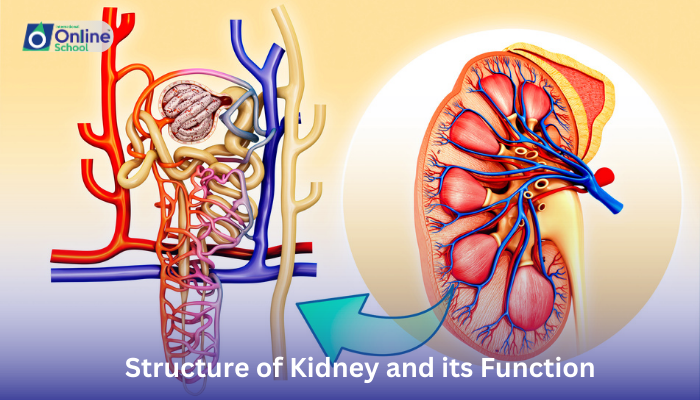
The kidney is a compact organ, approximately the size of a clenched fist, and is covered by a fibrous capsule. It has two distinct regions:
Renal Cortex: The outer layer of the kidney, responsible for filtration and reabsorption of essential solutes.
Renal Medulla: The inner layer of the kidney, containing concentrated urine and collecting ducts that transport urine to the ureters.
ii. Internal Anatomy of the Kidney: The Nephron
The nephron is the functional unit of the kidney, responsible for filtering blood and producing urine. Each kidney contains approximately one million nephrons, each consisting of two major components:
Glomerulus: A network of capillaries that filters blood, allowing waste products to pass into the nephron.
Tubular System: A series of interconnected tubules that reabsorb essential solutes and excrete waste products, forming urine.
iii. Filtration and Reabsorption: A Cyclical Process
Blood flows into the glomerulus, where it is subjected to ultrafiltration, a process that forces water and solutes across the glomerular filtration membrane. The filtrate, a protein-free mixture of water and solutes, enters the Bowman's capsule, the initial chamber of the nephron.
As the filtrate travels through the tubular system, it undergoes reabsorption, where essential solutes, such as glucose, amino acids, and electrolytes, are selectively reabsorbed back into the bloodstream. This process ensures that the body retains essential nutrients and maintains the proper balance of electrolytes.
Excretion: The Final Step
The remaining filtrate, now concentrated urine, travels through the collecting ducts of the renal medulla and eventually reaches the ureters, which transport urine to the bladder for storage and subsequent elimination.
Homeostasis: A Balancing Act
The kidneys play a pivotal role in maintaining homeostasis by regulating the volume and composition of body fluids. They help control blood pressure, blood volume, and electrolyte balance, ensuring optimal cellular function and overall health.
The kidney's intricate structure, composed of millions of nephrons, each performing the delicate task of filtration and reabsorption, is a testament to the remarkable design of the human body. By understanding the anatomy and physiology of the kidney, we gain a deeper appreciation for its vital role in maintaining homeostasis and supporting the body's intricate balance.
